
The Secret Behind Every Reply? Use These 2 Psychology Principles
Every single positive reply that you’ve ever received to a cold email can be pointed back to these two psychology principles; reciprocity and cognitive load theory.
In this blog, we’ll cover:
- What is Reciprocity
- What is Cognitive Load Theory
- How to use them
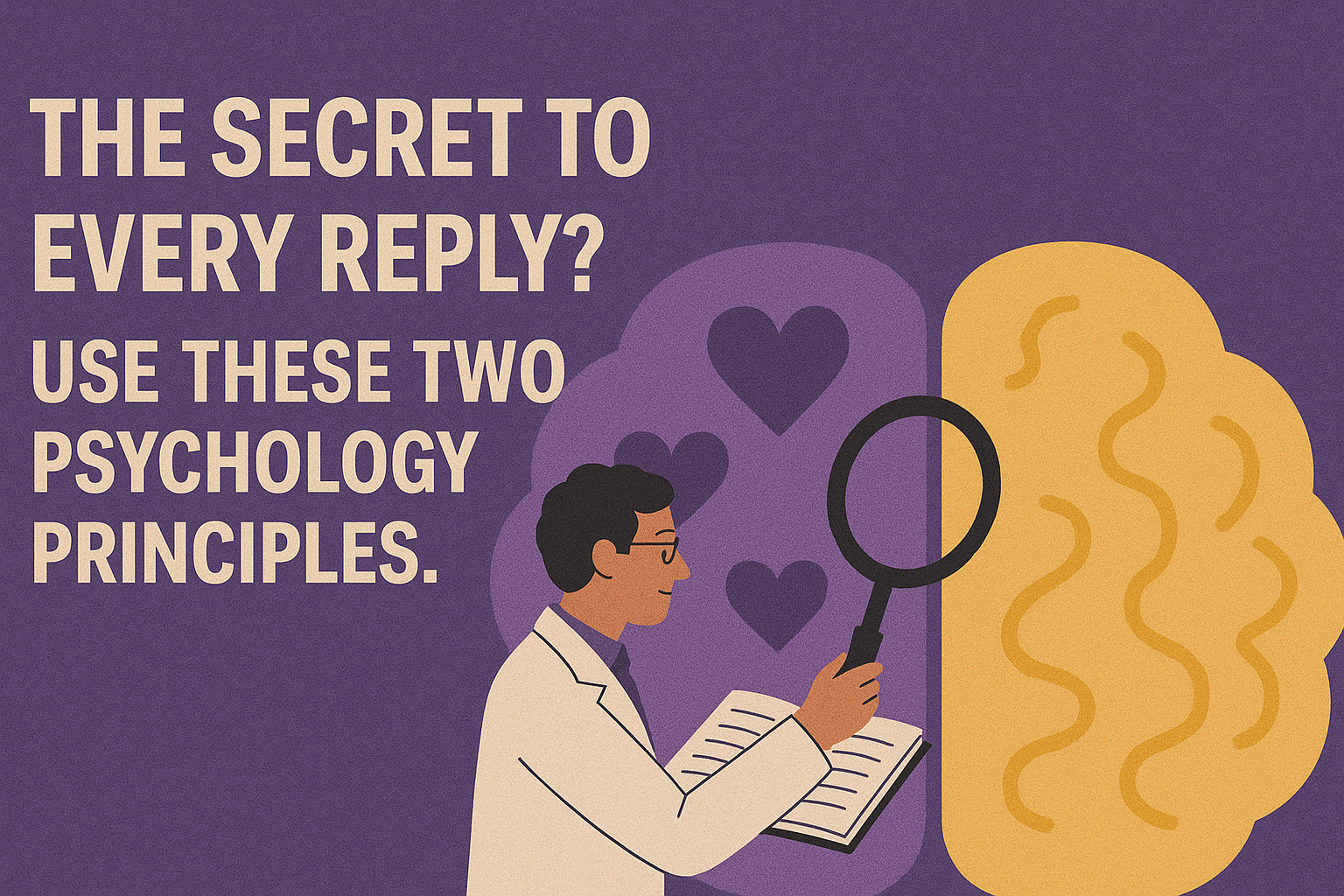
The most powerful emails use both reciprocity and cognitive load theory. But, replies can come because one of the two was correctly tapped.
So, how do you tap these? Well… first, let’s simplify these theories for you:
What is Reciprocity?
Reciprocity is simple. When someone gives us something, we feel compelled to return the favor.
When you cold email, reciprocity is triggered by the perceived effort of the sender. In a world where inboxes are flooded by AI generated messaging and templates, this will only become more critical.
We’ve seen two major datapoints fueling our conviction in the need to think about reciprocity.
1) Formality
Formality has become a 2x driver of response rates. AI tends to write at a more formal level. What we’ve seen is writing more “human” really means putting an effort into reducing the formality of your writing. What used to be a fringe datapoint (it wasn’t very impactful) has now become a key driver for reciprocity.
Takeaway: Write like you’d send a text. If it would be awkward to read it out loud in front of friends, then it’s likely too rigid. Ask friendly questions. Use common language. Shorten common words (ex. Opportunity → Opp or With to w/).
2) Personalization
96% of the cold emails your prospects sees in their inbox are automated. This means there continues to be a huge opportunity to showcase that you are putting in the work.
Check out this deep dive on personalization here.
Personalization in a world of AI is shifting the bar for what personalization meets the mark for driving reciprocity. Every persona has it’s own batch of commoditized personalization points. What’s important to consider is do you understand:
- Them and their background
- Their company and what’s happening across the account
- The market they serve
- The market they compete within
These four, when fully considered together can be a huge driver of reciprocity. Another reciprocity driver can be prospecting the entire account. If you’re able to surface insights from conversations with persona closer to the front lines, this can be a hyper effective way to stand out and create reciprocity.
Things like consistent follow up, multi-channel outreach, and warm introductions are additional ways to tap reciprocity, but all are subject to the thoughtfulness of the reasoning for the outreach.
What is cognitive load theory?
To explain cognitive load theory, you’ve got to understand how the brain stores and processes information.
Your brain has two different types of memory: working and long term. Working memory is where you store things actively happening.
A classic reason that we take notes during sales calls is to ensure we’re not relying on information being passed from our working to long term memory - not everything in your working memory is worth saving long term.
Your buyer reads email in a state of “triage”. They look for threads they recongize, names they know, and then they try to triage everything else.
They are quickly trying to gather “what the email is” and is it worth reading or replying to.
Cognitive load theory is the idea that our working memory—the part of our brain that processes new information—has a very limited capacity. If you overload someone's working memory with too much information, or information that is too complex or disorganized, they stop processing it.
In simple terms: The harder you make a prospect's brain work to understand your email, the less likely they are to reply.
Your cold email must be instantly digestible. If a prospect has to read a sentence twice, look up jargon, or hunt for the core message, you've lost them.
High cognitive load equals a fast delete/archive.
Low cognitive load equals a higher chance of a positive reply.
Tips to reduce cognitive load?
- Keep emails as concise as possible
- Use shorter, simpler sentence structures
- Use the “One Idea Rule”
The Buyer Comes First
When you realize the buyer’s experience:
- receiving AI generated noise
- mostly seeing automated templates
- seeing mostly complicated, unclear wording
- trying to move through their inbox as quickly as possible
You quickly come to realize why these psychology principles are so potent for cold email. You want to be understood and you want to earn a response.
If you’re looking for other ways to learn how to be a better emailer, get Lavender certified here with our free Email 101 and Email 201 courses.